
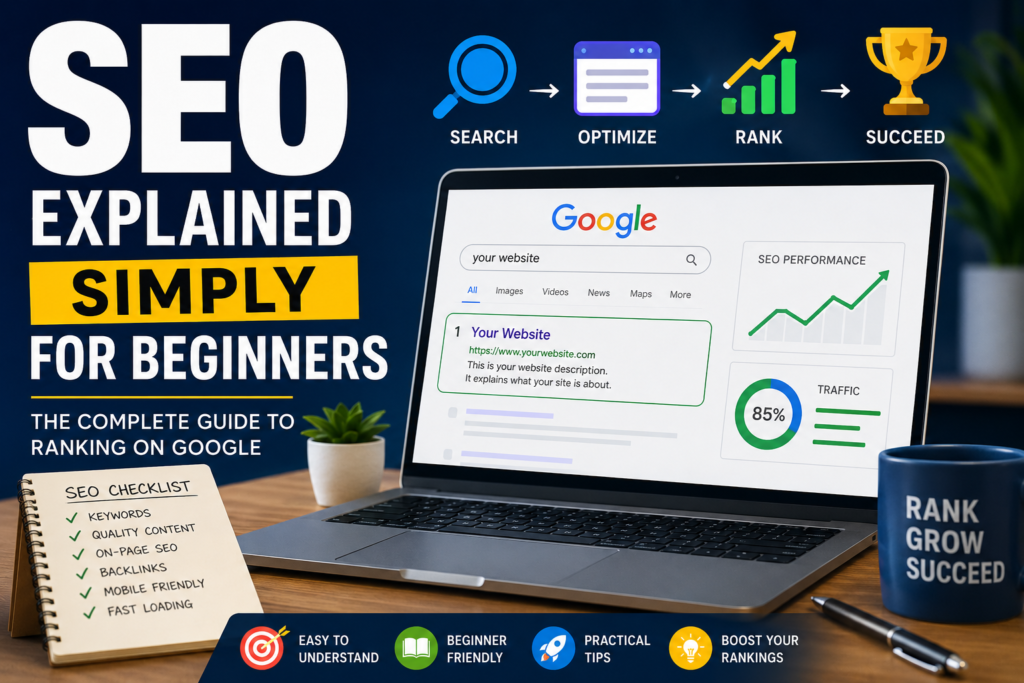
If you are new to websites, blogging, or digital marketing, you have probably heard the term SEO many times. But what exactly is SEO, and why is it important?
SEO, or Search Engine Optimization, is one of the most powerful ways to grow a website naturally through search engines like Google. It helps websites appear higher in search results, attract more visitors, and increase online visibility without paying for advertisements.
For beginners, SEO may seem complicated at first. Terms like keywords, backlinks, rankings, and indexing can sound confusing. However, SEO becomes much easier when explained step by step in simple language.
In this beginner-friendly guide, you will learn how SEO works, why it matters, and how you can start improving your website rankings today.
What Is SEO?
SEO stands for Search Engine Optimization. It is the process of improving a website so that it ranks higher on search engines like Google, Bing, and Yahoo.
When people search for information online, Google tries to show the most useful and relevant websites first. SEO helps your website become one of those trusted results.
For example, if someone searches for:
best digital marketing tipsGoogle will display websites that have:
- Helpful content
- Good website structure
- Proper keywords
- Fast loading speed
- Quality backlinks
The better your SEO, the higher your website can appear in search results.
If you are completely new to online marketing, you can first read our guide on What Is Digital Marketing? to understand the basics of online business promotion.
How Search Engines Work
Search engines like Google work in three main steps:
1. Crawling
Google uses automated bots called crawlers or spiders to discover web pages across the internet.
These bots scan:
- Website pages
- Images
- Links
- Content
2. Indexing
After crawling a page, Google stores the information in its database, called an index.
If your page is indexed, it can appear in search results.
3. Ranking
Google then decides which pages should appear first based on:
- Relevance
- Quality
- User experience
- SEO optimization
The goal of SEO is to help your pages rank higher than competitors.
Types of SEO
SEO is usually divided into three main categories.
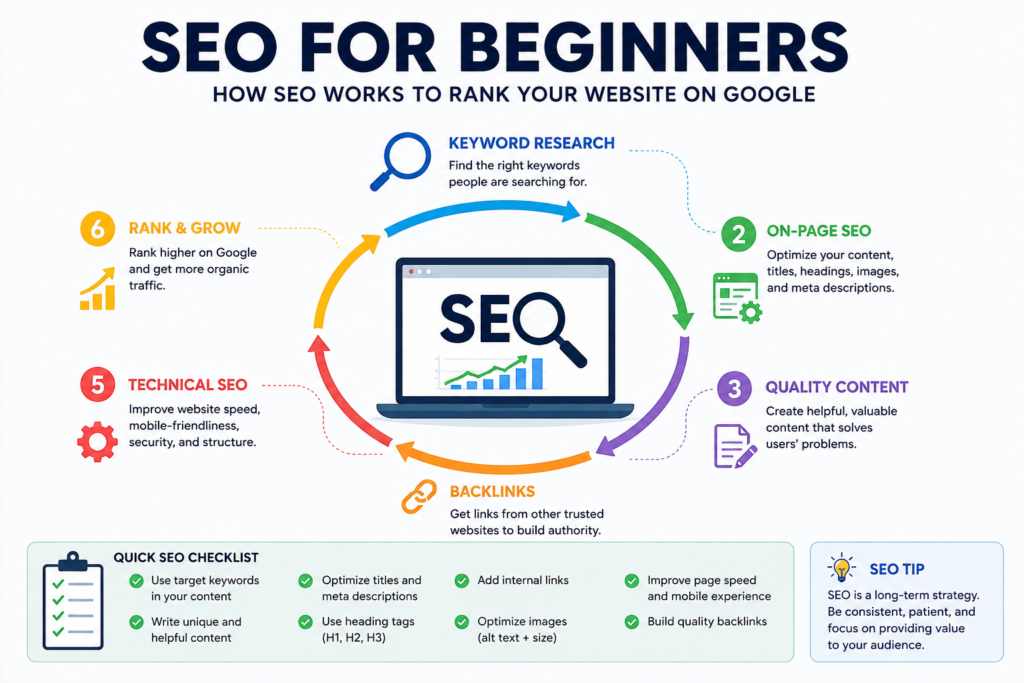
1. On-Page SEO
On-page SEO refers to optimizations made directly on your website.
Examples include:
- Titles
- Headings
- Meta descriptions
- Keywords
- Internal links
- Image ALT text
Good on-page SEO helps search engines understand your content better.
2. Off-Page SEO
Off-page SEO focuses on activities outside your website that improve authority and trust.
The biggest example is backlinks.
Backlinks happen when other websites link to your content.
Google sees backlinks as votes of confidence.
3. Technical SEO
Technical SEO improves the technical performance of your website.
Examples include:
- Website speed
- Mobile responsiveness
- Secure HTTPS connection
- XML sitemaps
- Fixing broken links
Technical SEO ensures search engines can crawl and understand your website properly.
Importance of Keywords in SEO
Keywords are the words or phrases people type into search engines.
Examples:
- SEO tips
- beginner SEO guide
- digital marketing strategies
Keywords help Google understand what your content is about.
However, beginners should avoid keyword stuffing. Instead of repeating the same keyword too many times, use it naturally throughout the article.
Long-tail keywords are especially useful because they target more specific searches.
Example:
SEO explained simply for beginnersThis keyword is easier to rank for than a broad keyword like:
SEOIf you want to understand how SEO supports online business growth, read our article about the benefits of digital marketing for small businesses.
On-Page SEO Basics
On-page SEO is one of the easiest areas beginners can improve quickly.
Here are the most important elements.
SEO Titles
Your article title should:
- Include the main keyword
- Be clear
- Be attractive
- Encourage clicks
Example:
SEO Explained Simply for BeginnersMeta Descriptions
Meta descriptions are short summaries shown below titles on Google search results.
A good meta description:
- Includes keywords
- Explains the article clearly
- Encourages users to click
Headings Structure
Use proper heading structure:
- H1 for main title
- H2 for main sections
- H3 for subtopics
This improves readability and SEO.
Internal Links
Internal links connect one article to another article on your website.
Benefits:
- Helps Google crawl your website
- Improves user experience
- Increases page views
Example:
You can link to articles like:
- What Is Digital Marketing?
- How Blogging Helps SEO
- Beginner’s Guide to Content Marketing
Image Optimization
Images should include:
- Proper file names
- ALT text
- Optimized size
Example ALT text:
SEO explained simply for beginnersThis helps Google understand your images.
What Are Backlinks?
Backlinks are links from other websites pointing to your website.
Example:
If another blog links to your SEO article, that is a backlink.
Backlinks are important because they:
- Build authority
- Increase trust
- Improve rankings
However, quality matters more than quantity.
One backlink from a trusted website is better than many low-quality links.
Why Content Matters in SEO
Content is one of the most important ranking factors in SEO.
Google wants to show users:
- Helpful content
- Original information
- Easy-to-read articles
- Valuable answers
This is why quality blogging helps SEO significantly.
Websites that publish useful content regularly often rank higher on search engines.
If you want to learn more, read our article on How Blogging Helps SEO.
Common SEO Mistakes Beginners Make
Many beginners make simple SEO mistakes that hurt rankings.
1. Keyword Stuffing
Repeating the same keyword too many times makes content unnatural.
Google may penalize this behavior.
2. Ignoring Mobile Users
Most users browse websites on phones.
Your website should be mobile-friendly and responsive.
3. Slow Website Speed
Slow websites create poor user experience and hurt SEO rankings.
Optimize:
- Images
- Hosting
- Website code
4. Missing Meta Descriptions
Without meta descriptions, search engines may not display attractive previews for your pages.
5. Publishing Thin Content
Very short articles often struggle to rank.
Detailed and helpful content performs better.
Simple SEO Tips for Beginners
Here are beginner-friendly SEO tips you can start using today.
Create Helpful Content
Focus on solving problems and answering user questions.
Use Keywords Naturally
Place keywords:
- In titles
- In headings
- In the first paragraph
- In meta descriptions
Avoid overusing them.
Improve Website Speed
Use optimized images and reliable hosting.
Build Internal Links
Link your articles together naturally.
This helps both users and search engines.
Optimize for Mobile Devices
Ensure your website works perfectly on smartphones and tablets.
Update Old Articles
Refreshing old content can improve rankings and traffic.
Why SEO Is Important for Beginners
SEO is important because it helps websites grow organically without depending entirely on paid advertising.
Benefits of SEO include:
- More website traffic
- Better visibility
- Increased trust
- Long-term growth
- Higher conversion opportunities
Although SEO takes time, the long-term results can be extremely valuable.
Conclusion
SEO may seem difficult at first, but once you understand the basics, it becomes much easier.
By learning about:
- Keywords
- Content optimization
- Internal linking
- Backlinks
- Technical SEO
you can start improving your website step by step.
The key to successful SEO is consistency. Continue creating high-quality content, optimizing your pages, and learning how search engines work.
Over time, your website can gain more visibility, attract more visitors, and grow naturally through Google search.
Start learning SEO today and build a strong online presence for the future.
-> Learn more about How to Create a Strong Online Presence
Frequently Asked Questions (FAQs)
What does SEO mean?
SEO stands for Search Engine Optimization. It is the process of improving websites to rank higher on search engines like Google.
Is SEO difficult for beginners?
No. SEO becomes easier when learned step by step. Beginners can start with basic concepts like keywords, content optimization, and internal linking.
How long does SEO take?
SEO usually takes several weeks or months to show significant results because search engines need time to crawl and rank pages.
Why are keywords important in SEO?
Keywords help search engines understand what your content is about and match it with user searches.
Can I learn SEO for free?
Yes. Many free resources, blogs, videos, and tools are available online to help beginners learn SEO.