
Introduction
In today’s digital world, businesses have countless ways to connect with customers online. Among the most powerful strategies are email marketing and social media marketing. Both methods help brands increase visibility, generate leads, and boost sales. However, many business owners still ask one important question:
Which is better: Email Marketing or Social Media Marketing?
The answer depends on your goals, audience, and marketing strategy. In this article, we will compare both marketing methods, explain their advantages and disadvantages, and help you decide which one works best for your business in 2026.
What is Email Marketing?
Email marketing is a digital marketing strategy that involves sending emails to customers or subscribers. Businesses use email campaigns to promote products, share updates, and build strong relationships with their audience.
Some common types of email marketing include:
- Newsletters
- Promotional emails
- Welcome emails
- Abandoned cart emails
- Product announcements
Email marketing remains one of the highest ROI marketing strategies in the digital world.
➜ Learn more about Email Marketing
What is Social Media Marketing?
Social media marketing involves promoting a business through platforms like:
- TikTok
- X (Twitter)
Businesses use social media to:
- Increase brand awareness
- Engage with followers
- Drive website traffic
- Build online communities
- Promote products and services
Social media is highly effective for reaching large audiences quickly.
➜ Read more about Social Media Marketing
Email Marketing vs Social Media Marketing
1. Audience Reach
Social media platforms allow businesses to reach millions of users instantly. Viral content can spread rapidly and increase visibility within hours.
Email marketing, however, targets people who already subscribed to your list. Although the audience is smaller, it is usually more interested and engaged.
Winner:
Social Media Marketing for wider reach.
2. Customer Engagement
Social media allows real-time interaction through comments, likes, shares, and direct messages. It creates conversations and builds communities.
Email marketing offers more personalized communication. Businesses can send customized messages based on customer behavior and interests.
Winner:
Tie — both offer strong engagement in different ways.
3. Return on Investment (ROI)
Email marketing consistently delivers one of the highest ROIs in digital marketing. Many studies show businesses can earn significant revenue from targeted email campaigns.
Social media marketing may require paid advertising to achieve strong results due to algorithm changes and increasing competition.
Winner:
Email Marketing
4. Brand Awareness
Social media is excellent for increasing brand visibility. Content can be shared across platforms and discovered by new audiences daily.
Email marketing mainly focuses on nurturing existing subscribers rather than attracting new people.
Winner:
Social Media Marketing
5. Conversion Rates
Email marketing often generates higher conversion rates because subscribers already trust the brand and willingly joined the mailing list.
Social media users are usually browsing casually, which can reduce buying intent.
Winner:
Email Marketing
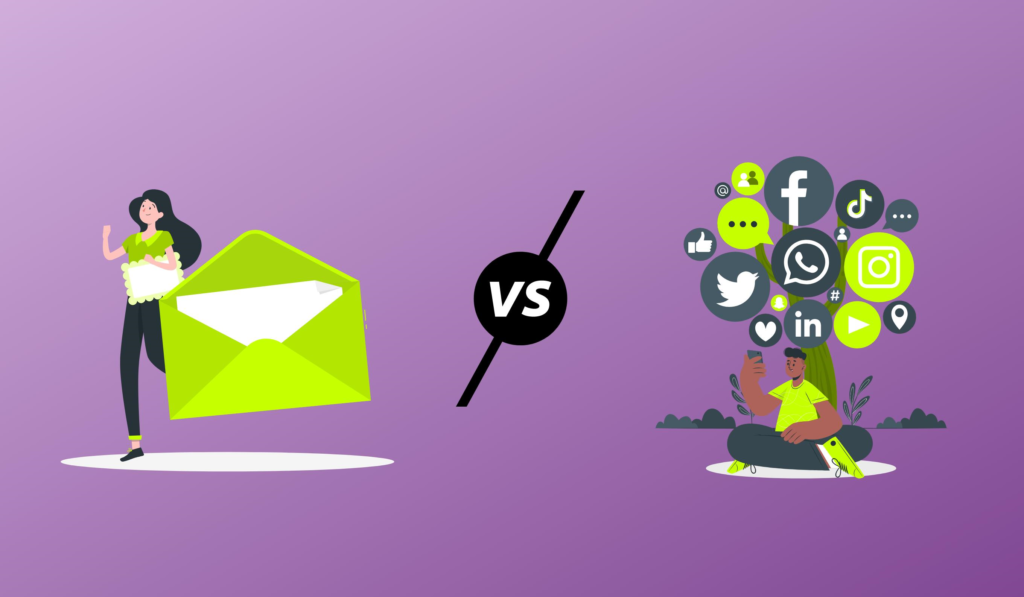
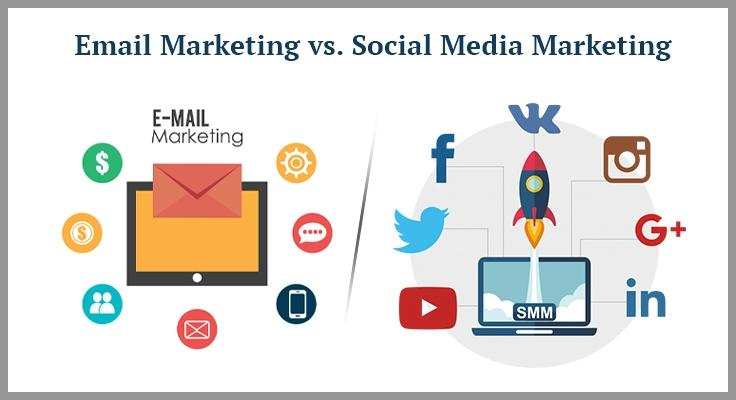
Email Marketing vs Social Media Marketing — Which strategy delivers better engagement, higher ROI, and faster business growth in 2026?
Advantages of Email Marketing
Higher ROI
Email campaigns can generate excellent returns with minimal cost.
Personalized Communication
Businesses can segment audiences and send targeted messages.
Full Ownership of Audience
Unlike social media platforms, your email list belongs to you.
Better Conversion Rates
Emails often convert better than social media posts.
Advantages of Social Media Marketing
Massive Audience Reach
Billions of users are active on social media platforms daily.
Faster Brand Exposure
Content can go viral quickly.
Strong Customer Interaction
Businesses can communicate directly with followers.
Great for Visual Marketing
Perfect for videos, reels, and brand storytelling.
Disadvantages of Email Marketing
- Requires building an email list
- Open rates can vary
- Emails may land in spam folders
- Less effective for viral exposure
Disadvantages of Social Media Marketing
- Algorithm changes reduce reach
- High competition
- Paid ads are often necessary
- Platforms control your audience visibility
Which Marketing Strategy is Better?
The truth is that both strategies are powerful. The best choice depends on your business goals.
Choose Email Marketing if you want:
- Higher conversions
- Better customer retention
- Personalized communication
- Strong ROI
Choose Social Media Marketing if you want:
- Brand awareness
- Viral growth
- Community engagement
- New audience discovery
However, the most successful businesses combine both strategies together.
For example:
- Use social media to attract followers
- Convert followers into email subscribers
- Use email marketing to increase sales and customer loyalty
This combination creates a complete digital marketing funnel.
Best Strategy for Small Businesses in 2026
For small businesses and startups, combining email marketing with social media marketing is the smartest strategy.
Social media helps businesses grow visibility quickly, while email marketing builds long-term customer relationships.
Businesses that use both channels together often achieve:
- Higher traffic
- Better engagement
- Increased sales
- Stronger brand authority
Conclusion
When comparing Email Marketing vs Social Media Marketing, there is no single winner for every business. Social media excels at visibility and engagement, while email marketing dominates in ROI and conversions.
The best approach is to use both strategically. Businesses that combine social media marketing with email campaigns can build stronger customer relationships and achieve long-term success in 2026 and beyond.