


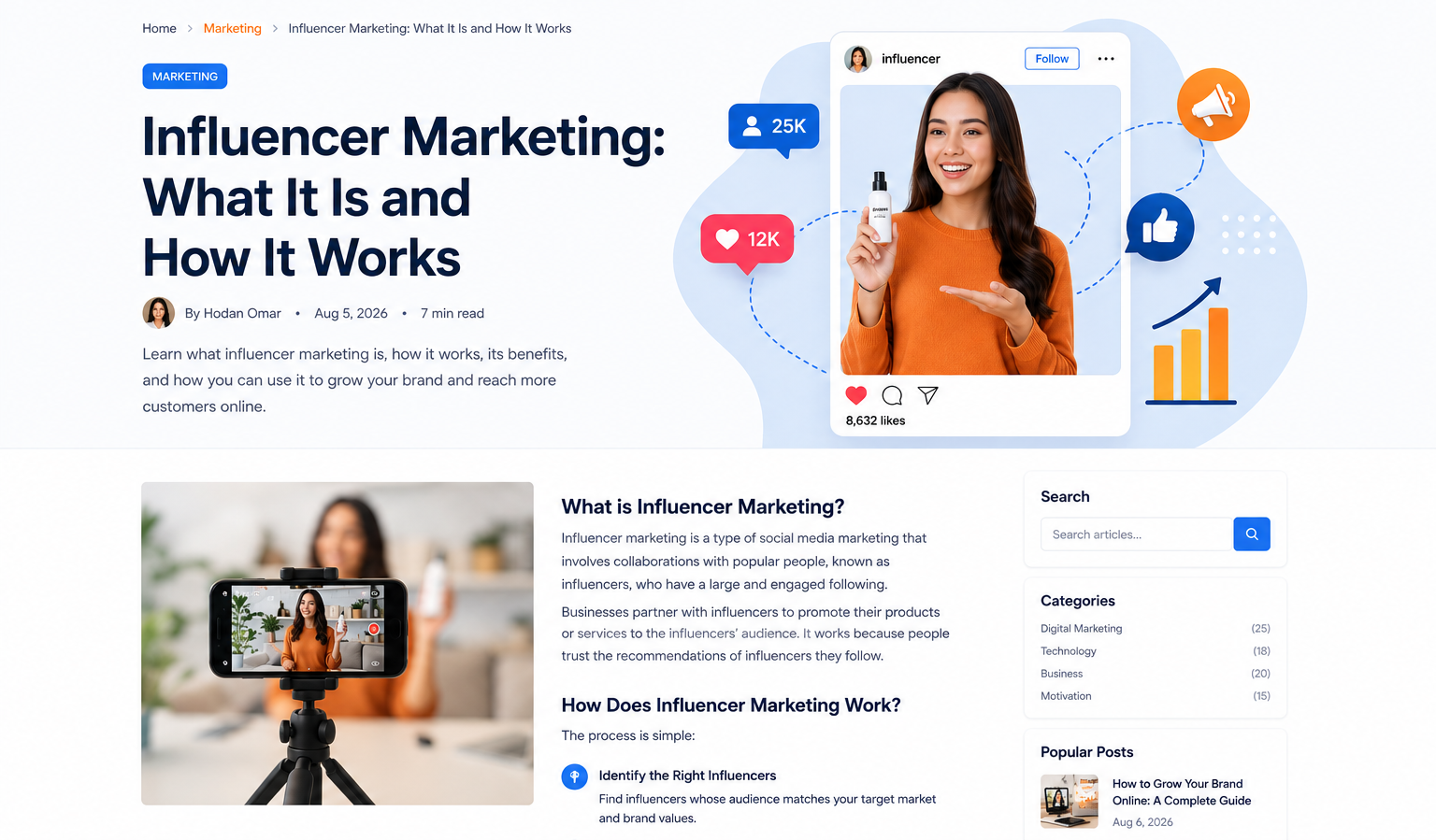
Brands today are competing for attention in crowded social feeds, and traditional ads no longer guarantee results. This is where influencer marketing comes in — a strategy that has reshaped how companies connect with audiences online. Understanding how it works can help any business, big or small, build trust and reach new customers faster.
What Is Influencer Marketing?
Influencer marketing is a form of promotion where brands partner with individuals who have an engaged, loyal following on platforms like Instagram, TikTok, or YouTube. Instead of speaking directly to consumers through ads, companies let a trusted voice introduce their product or service. Because followers already trust the influencer’s opinion, this approach often feels more authentic than traditional advertising.
How Influencer Marketing Works
Finding the Right Influencer
Not every influencer is a good fit for every brand. Businesses typically look for creators whose audience matches their target market in terms of age, interests, and location. Tools like HubSpot’s influencer marketing resources help businesses evaluate engagement rates rather than just follower counts, since a smaller, highly engaged audience often performs better than a large but passive one.
Setting Clear Campaign Goals
Before reaching out, brands define what success looks like — whether that’s brand awareness, website traffic, or direct sales. These goals shape the type of content the influencer creates, from a simple product mention to a full unboxing video.
Building the Partnership
Once a match is found, the brand and influencer agree on deliverables, timelines, and compensation. This can range from free products to paid sponsorships, depending on the influencer’s reach and the campaign’s scope.
Measuring Results
After the campaign runs, businesses track metrics such as engagement, click-through rates, and conversions. This data shows whether the influencer marketing effort delivered a real return on investment, and it guides future partnerships.
Why Businesses Invest in Influencer Marketing
Influencer marketing works because it borrows credibility. When a respected creator recommends a product, their audience is more likely to trust it than a standard ad. It also allows brands to reach niche communities that would be difficult to target through traditional advertising alone. For platforms like Google’s Think with Google research shows, consumers increasingly rely on peer and creator recommendations before making purchase decisions.
Getting Started With Influencer Marketing
Small businesses don’t need a celebrity endorsement to see results. Micro-influencers — creators with smaller but highly engaged followings — often deliver strong returns at a lower cost. Start by identifying creators in your niche, reach out with a clear proposal, and track performance closely to refine your approach over time.
Conclusion
Influencer marketing has become one of the most effective ways for brands to build trust and reach new audiences online. By choosing the right partners, setting clear goals, and measuring results, any business can use influencer marketing to grow its presence in a crowded digital space.